
In the modern workplace, teams often struggle with scattered communication, endless email threads, and multiple software tools that don’t connect with each other. Managing projects, tracking tasks, and collaborating effectively can become overwhelming. This is exactly the problem that monday.com aims to solve. Designed as a flexible work management platform, monday.com helps teams organize their work, collaborate smoothly, and stay productive in a single digital workspace.
A New Approach to Work Management
monday.com describes itself as a Work Operating System (Work OS)—a platform that allows organizations to build and customize their own workflows for managing projects and processes. Instead of using several disconnected tools, teams can centralize their work in one place where people, tasks, and data are connected.
The idea behind the platform is simple: when information is organized and visible to everyone involved, teams can make better decisions and work faster. By eliminating scattered spreadsheets and communication gaps, monday.com helps organizations focus on meaningful work rather than administrative tasks.
Visualizing Work in a Clear and Engaging Way
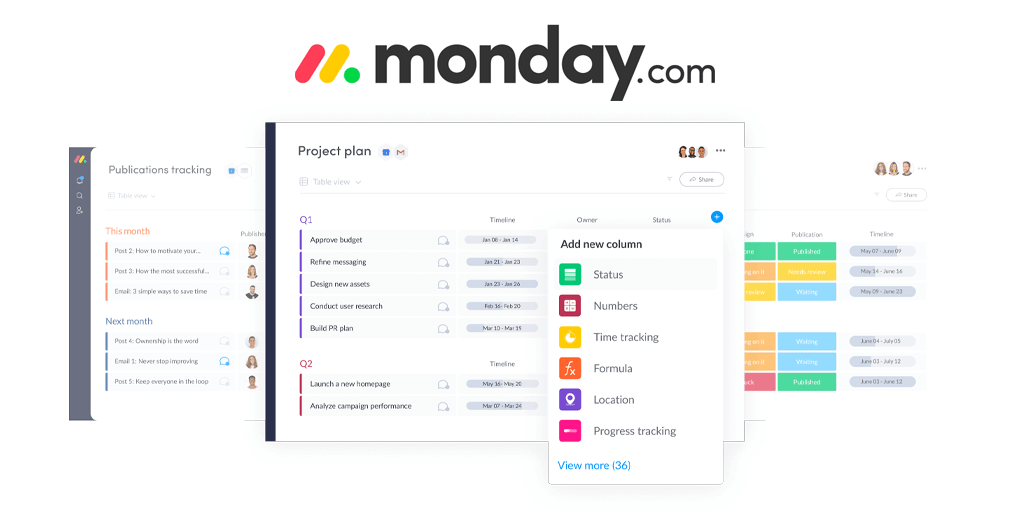
One of the most attractive aspects of monday.com is its visual interface. Projects are organized into boards, which function like digital workspaces where tasks, updates, and responsibilities are tracked. Within these boards, tasks—called items—can include details such as deadlines, progress status, assigned team members, and priority levels.
These boards can be viewed in multiple formats such as Kanban boards, timelines, calendars, or dashboards. This flexibility allows teams to visualize their work in the way that suits them best. For example, project managers may prefer timeline views, while marketing teams might rely on calendars to track campaign schedules.
Automation That Saves Time
Another powerful feature of monday.com is automation. Many daily tasks in organizations are repetitive—sending reminders, updating statuses, or notifying team members about deadlines. The platform allows users to automate these processes through customizable rules.
For example, a workflow can automatically notify a manager when a task is completed or remind a team member when a deadline approaches. Automation reduces manual work and helps prevent mistakes caused by human oversight.
By freeing employees from repetitive tasks, organizations can focus more on strategy, creativity, and innovation.
Collaboration in One Place
Communication plays a major role in team productivity. monday.com allows users to comment directly on tasks, tag teammates, share files, and provide updates within the platform. Instead of searching through long email chains, all conversations related to a project remain organized in one place.
The platform also supports real-time collaboration through tools like workdocs, where multiple team members can work on documents simultaneously and connect ideas directly to tasks and workflows.
This feature is particularly useful for remote or hybrid teams that rely heavily on digital collaboration.
Integrations That Connect Your Tools
Most companies already use a variety of digital tools—such as Slack, email platforms, or development software. monday.com integrates with hundreds of third-party applications, allowing organizations to connect their existing systems into a single workflow.
These integrations ensure that data flows seamlessly between platforms, eliminating the need to manually transfer information between tools. As a result, teams can maintain efficiency while still using the applications they are comfortable with.
Flexible for Every Industry
One reason monday.com has become popular worldwide is its adaptability. The platform can be used by many different departments including marketing, sales, HR, operations, and product development. Over 100,000 organizations globally rely on the platform to manage projects and processes in their own way.
For instance:
- Marketing teams use it to manage campaigns and content calendars.
- HR teams track recruitment pipelines and employee onboarding.
- Software developers manage product roadmaps, bug tracking, and sprint planning.
Because the platform is customizable, each team can design workflows that match their specific needs.

The Future of Digital Workspaces
As businesses continue to adopt remote and hybrid work models, tools like monday.com are becoming essential. By combining project management, automation, collaboration, and data visualization in one platform, monday.com provides a modern solution for managing complex workflows.
Ultimately, the platform’s mission is simple: to make work more transparent, organized, and productive. In a world where efficiency and teamwork are critical for success, monday.com represents a new generation of digital workspaces designed for the future of work.

